Rare and Exotic Fruits
Rare and exotic tropical fruit trees are cultivated in warm, humid regions around the world, often prized for their unusual flavors, striking appearances, and nutritional benefits. Many of these trees produce fruits with vibrant colors and distinctive textures that are unfamiliar outside their native habitats. They are commonly found in tropical areas of Southeast Asia, Central and South America, the Caribbean, and parts of Africa and Oceania.

Breadfruit- Ma'afala (Artocarpus Altilis)
Ma'afala is a popular breadfruit variety that has been grown in Hawai'i for decades. It is a fast-growing tree that tends to have a shorter and more compact shape than most breadfruit varieties. Prune as needed. Trees grow best below 1500 feet elevation. The fruit has a cream-colored to pale yellow flesh and is usually seedless. The flesh has a soft, tender texture when cooked.
Our Ma'afala breadfruits are propagated through air-layering.

Breadfruit- Tahitian (A. altilis)
The Tahitian Breadfruit tree's growth habits are the same as the Ma'afala. Breadfruit can be eaten as you would eat a potato. It can be baked, roasted, fried, or made into a chowder. This variety takes longer to cook compared to the Ma'afala. The best thing about this variety is that when it gets soft and ripe, you can steam it and after it cools, it firms up and tastes like a sweet bread. When cooked, it is the best ripe breadfruit variety we have ever tasted.
Prefers to be in full sun. Best to top it to maintain a 10-15 feet high tree to encourage a wide canopy for easy picking. Our Tahitian Breadfruits are propagated through air-layering.

Cempedak (Artocarpus integer)
Cempedak can be eaten as a vegetable when young, and a delicious fruit when ripe. The ripe fruits can be opened with your bare hands, and the interior of the fruit is latex-free. The pulp is soft, yellow or orange in color, and is sweet, tasting like a cross between a durian and a mango. The seeds are edible when roasted or boiled, and have a pleasant nutty flavor.
Trees are susceptible to wind, so it is best to keep them pruned. Pruning also encourages the tree to bear fruits in its lower trunk and branches. With proper care and ideal planting conditions, seedlings can bear fruit in 4 to 5 years.

Cempejack (Artocarpus integer x Artocarpus heterophyllus)
Cempejack is a cross between a Cempedak and a Jackfruit. The skin and the size of the Cempejack is like a Jackfruit, and the interior texture and taste is like a Cempedak. Growth habits are just like a Jackfruit. Keep it pruned to encourage fruits in its lower trunk and branches. Grows best below 2000 feet elevation. With proper care and ideal planting conditions, seedlings can bear fruit in 4 to 5 years.

Jackfruit (Artocarpus heterophyllus)
The Jackfruit is the largest fruit in the world. The fruits often weighs 20 to 60 pounds. This variety is the best-tasting jackfruit we have eaten. It is delicious when eaten fresh and can be frozen and put in smoothies. The seeds can be steamed and eaten like chestnuts. The young fruit has versatile uses in cooking and can be cooked as a vegetable with coconut milk or used as a meat substitute. Our tree is 20 years old and is only 15 feet tall, and has been producing fruit since it was less than 4 years old. It is best grown below 2000 feet elevation. You need to put vegetable oil on your knife and hands to minimize the sticky latex when opening the fruit. Use vegetable oil to also clean the knife and your hands afterwards.
Keep the tree pruned to encourage fruits in its lower trunk and branches. With proper care and ideal planting conditions, seedlings can bear fruit in 4 to 5 years.

Marang
(Artocarpus odoratissimus)
This photo shows the biggest Marang fruit we have ever ate. The Marang fruit, also known as the Jackfruit's cousin, is an exotic and delicious fruit native to Southeast Asia. It features a spiky green exterior and a creamy, custard-like flesh that is both sweet and fragrant. Marang has a rich texture and unique flavor that can be enjoyed fresh, in desserts, or blended into smoothies. The seeds are also edible after roasting.
The Marang tree's growth habits are the same as the Breadfruit tree. It can get big, so start pruning it at a young age. Grows best below 1200 feet elevation. With proper care and ideal planting conditions, it can bear fruit in 5 to 8 years.
.jpg)
Pedalai (A. sericicarpus)
Pedalai, also known as Gumihan in the Philippines, is very rare in Hawai'i. It is similar to the Marang in its taste, texture, and the appearance of the flesh, but can be distinguished by its external appearance. From the outside, the Pedalai looks like a giant hairy rambutan with a bright orange color when ripe.
The Pedalai tree's growth habits are the same as the Marang and Breadfruit trees. It can get big, so start pruning it at a young age. Grows best below 1200 feet elevation. With proper care and ideal planting conditions, it can bear fruit in 5 to 8 years.
Other Artocarpus varieties will be posted once available

Cacao (Theobroma cacao)
The cacao tree thrives in tropical climates and produces fruit also known as cacao pods. The pods are oval-shaped and can vary in color from yellow to red, depending on the variety. Inside each pod are cacao beans surrounded by a sweet, white pulp. The beans are the key ingredient for making chocolate.
It is best to keep the tree at a height of no more than 10 feet for easy picking. The cacao tree prefers partial shade. With ideal growing conditions and proper care, it will fruit in 3 years.

Jaguar Cacao
(Theobroma bicolor)
The Jaguar cacao, also known as Macambo, is a fascinating species of cacao tree native to the Amazon rainforest. This tree produces unique fruits that are distinct from the more commonly known Theobroma cacao, with a yellowish-green color and creamy, sweet pulp surrounding the seeds.
Jaguar cacao is often praised for its rich, complex flavors, making it a favorite among chocolate connoisseurs. The nutty Macambo beans alone can create a white chocolate bar and when processed together with regular cacao, produces a smooth, milky bar without any dairy. The beans can also be eaten as a healthy snack that is rich in protein, fiber, and Omega 9.
The tree is bigger than the Theobroma cacao tree. It can grow to a height of 15 to 20 feet. With proper care and ideal growing conditions, it will fruit in 5 years.

Jamaican Cherry/Candy Fruit
(Muntingia calabura)
The Jamaican cherry, also known as the candy fruit, is a small, round fruit that has a rich aroma and bursts with a sweet flavor. Its vibrant red to pink skin is soft and juicy and it is often enjoyed fresh. The tree is small to medium-sized, and the small white flowers resemble those of a strawberry plant, and the ripe fruits resemble cherries.
The tree prefers partial to full sun and is an excellent shade tree. With ideal growing conditions and proper care, it will fruit in 3 years.

Brazilian Cherry/Grumichama (Eugenia brasiliensis)
The Grumichama fruit, also known as the Brazilian cherry, is a small, dark purple to black fruit. It has a sweet and slightly tart flavor, making it a delicious addition to desserts or enjoyed fresh. The Grumichama tree itself is tropical and sub-tropical tree that is small to medium-sized, featuring green leaves and beautiful white flowers that attract pollinators. This resilient tree thrives in well-drained soils and is often cultivated for its ornamental value as well as its tasty fruit. With ideal growing conditions and proper care, it will bear fruit in 3 to 4 years.


Surinam Cherry (Eugenia uniflora)
The Surinam cherry is a small, vibrant red or dark purple fruit that grows on a tropical tree native to South America. The tree is small to medium in size, and the fruit has a sweet and slightly tart flavor, making it a delightful addition to jams, jellies, and desserts. Besides its culinary uses, the Surinam cherry tree is often appreciated for its ornamental value and its use as a hedge or a shade tree in gardens and landscapes. It is also well-suited for making a Bonsai. With ideal growing conditions and proper care, it will bear fruit in 3 to 4 years.

Rainforest Plum
(Eugenia candolleana)
The rainforest plum is a fruit native to the coastal jungles of Brazil that, despite its name, tastes more like a cherry than a plum. The fruit is dark purple in color when ripe and has a very sweet and firm pulp. The tree fruits several times a year and is a heavy bearer too. It is a shrubby tree growing to a maximum height of 10 to 12 feet. Flowers appear in large clusters, with fruits ripening several weeks later. It thrives best in full sunlight. With proper care and ideal growing conditions, it will bear fruit in 3 to 4 years.

Durian (Durio zibethinus)
Durio zibethinus is the most common type of durian. It is a large evergreen tree, but grafted trees can be maintained at a height of 20 to 25 feet for easy picking. The durian fruit is noted for its sweet, creamy texture and its distinctive strong aroma. Some of the popular cultivars are Kob, Red Prawn, Mdur88, D145, D168, and Pohakulani.
Pohakulani is an early season cultivar that originates on the Big Island. It is known to be a prolific producer of fruit here in Hawaii. The fruit is often favored by locals who consider it very delicious with its intense caramel flavors.
Shade cages are essential to protect young durian trees from dry weather, wind, and rose beetles. Provide proper drainage. With proper care and ideal growing conditions, grafted durian can produce fruit in 5 to 7 years. Durian grows best below 1200 feet.

.jpg)
Aleamai Durian
(Durio zibethinus)
Aleamai Durian is a new Hawaiian-grown durian cultivar originally planted on our farm in Papaikou on the Big Island. It bears fruit in the fall months of October-November, producing small round fruits weighing 3 to 6 pounds. The flavor is buttery, nutty, rich, and sweet, balanced with a hint of bitterness, and with a creamy texture. A friend from Penang, Malaysia who is a durian connoisseur tasted our Aleamai durian and said that it is the best-tasting durian they have eaten on the island. The tree is a prolific producer of fruit.

Durian (Durio graveolens)
Durio graveolens is a species of durian found in the lowland forests of Borneo. The tree has larger leaves than Durio zibethinus and the fruit varies in color from green or brown to yellow or red. The flesh is reddish or orange in color and is thick, sweet, and very creamy yet dry. This durian does not have a strong odor, unlike other types of durian. The varieties that are available in Hawaii are Dg9, Suluk Brunei, and Suluk Sianggong.
Shade cages are essential to protect young durian trees from dry weather, wind, and rose beetles. Provide proper drainage. With proper care and ideal growing conditions, grafted durian can produce fruit in 5 to 7 years.
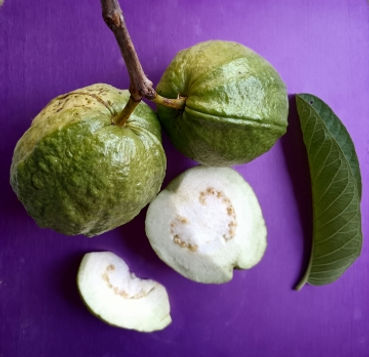
Guapple white guava
(Psidium guajava)
Guapple is a large variety of guava and has a very high demand in the market. It has a sweet, crunchy flesh that is rich in Vitamins A, B, and C and also packed with nutrients.
This air layered guapple tree will fruit in one year. Keep it at a height of no more than 6 feet. Prune after harvesting to encourage multiple new growths. Bears fruit several times a year. Can grow below 3000 feet.

Indonesian White Guava
(Psidium guajava)
Indonesian white guava is a popular variety of guava renowned for its thick, melting flesh and sweet, delicious flavor. The large, round fruits have yellowish-green skin with white pulp inside. This guava contains Vitamins A, B, and C, fiber, potassium, magnesium, and antioxidants.
The tree is small and relatively low-maintenance, preferring full sun but also tolerating partial shade. This air layered white guava tree will fruit in one year. Keep it at a height of no more than 6 feet. Prune after harvesting to encourage multiple new growths. Bears fruit several times a year. Can grow below 3000 feet.

Seedless white guava
(Psidium guajava)
The seedless white guava is a variety of guava prized for its absence of seeds and its sweet and crunchy pulp, which makes it particularly enjoyable to eat fresh. This guava has a yellowish-green skin and has a pleasant aroma and delicious flavor. The seedless white guava is rich in vitamins and antioxidants.
The leaves of this guava tree are thicker and more rounded than the Guapple and Indonesian white guava. The tree is small and relatively low-maintenance, preferring full sun but also tolerating partial shade. This air layered seedless guava tree will fruit in one year. Keep it at a height of no more than 6 feet. Prune after harvesting to encourage multiple new growths. Bears fruit several times a year. Can grow below 3000 feet.


Thai Purple Guava
(Psidium guajava)
Thai Purple Guava is a beautiful variety of guava in which everything from the leaves to the buds, flowers, fruits, stem, and roots are pinkish-purple or purple in color. The ripe fruit has a thick, soft and sweet pulp with small seeds. The Thai Purple Guava is rich in vitamins and antioxidants.
This air layered Thai Purple Guava tree will fruit in one year. Keep it at a height of no more than 6 feet. Prune after harvesting to encourage multiple new growths. Bears fruit several times a year. Can grow below 3000 feet.

.jpeg)
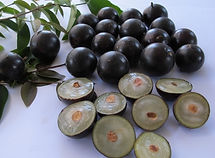
Jaboticaba (Myrciaria cauliflora)
The Jaboticaba is a grape-like fruit, sweet with a pleasant sub-acid tang. Some people say it tastes like a combination of grapes, guava, and lychee. The skin has a tannic, resinous taste, which some prefer to remove before eating. The fruit is rich in nutrients and antioxidants. Jaboticabas are delicious eaten fresh, enjoyed as a snack, or used to make jams, jellies, juices, and wine.
Seedlings take 7 to 10 years to bear fruit. Prefers full sun. Prefers rich, moist, well-drained, slightly acidic soil. It is best to prune off the small side branches so that the bigger trunks can get exposed to sunlight. Due to its slow growth and small stature, Jaboticaba is also a popular choice for bonsai specimens. Can grow below 3000 feet.

Yellow Jaboticaba / Cabedula
(Myrciaria glazioviana)
The Yellow Jaboticaba or cabedula is a small, gumball-sized, round yellow fruit with a slight fuzz. It is sweet, juicy, tangy, and aromatic, often compared in taste to apricot, peach, and tangerine, with a unique blend of sweetness and tartness when fully ripe.
The tree is small to medium-sized and is a slow-growing, multi-trunked tree. It has a dense, rounded crown that can be as wide as it is tall, but it can be pruned for container or bonsai cultivation. Thrives in warm, humid conditions. Prefers full sun but can tolerate partial shade. It is not tolerant of salty or poorly drained soil.


Lanzones/Langsat
(Lansium domesticum)
Lanzones is a unique fruit that is very popular in the Philippines; it is so popular that there is a whole festival dedicating to celebrating this fruit. When ripe, the segments of its translucent flesh are juicy and have a sweet, tart taste, often described as a mix of grapes and pomelo, with citrus and floral notes. Small fruits are seedless, but larger fruits contain one or two green seeds, which are bitter and should not be eaten. Lanzones are a good source of vitamins and also contain antioxidants and fiber as well. The dried skin of Lanzones can be burned to repel mosquitoes.
Grafted trees will fruit in 3 to 5 years with proper care and ideal growing conditions. The tree can grow up to 30 feet, but it is recommended to prune it annually to keep it to 10 feet. After topping, fertilize with Calcium nitrate to induce flowering. Prefers partial to full sun. Grows best below 1000 feet elevation.

Duku Langsat
(Lansium domesticum)
Duku Langsat is a popular variety of Langsat in Indonesia. The skin of the fruit is thicker than Lanzones and has minimal latex, and the flesh is very sweet, delicious, and almost seedless.
Grafted trees will fruit in 3 to 5 years with proper care and ideal growing conditions. The tree can grow up to 30 feet, but it is recommended to prune it annually to keep it to 10 feet. After topping, fertilize with Calcium nitrate to induce flowering. Prefers partial to full sun. Grows best below 1000 feet elevation.

Bacion Sweet Santol (Sandoricum koetjape)
The Santol, sometimes known as the cotton fruit, is native to Southeast Asia and belongs to the family Meliaceae, which makes it related to Langsat. The fruit has a thick, leathery rind that ripens to a yellowish-gold or reddish hue. Inside, the fruit contains a soft, cottony white pulp that clings tightly to several large seeds. Bacion Sweet Santol is the sweet variety in which the pulp is delicious and mildly tangy. Despite its fibrous texture, the pulp is juicy and aromatic, and is often eaten fresh. The rind can be made into preserves or used in traditional Filipino dishes.
This grafted Bacion Sweet Santol tree is a fast-growing, long-lived tree that can reach heights of 30 feet, with a wide canopy. It thrives in humid, lowland tropical climates and prefers partial to full sun. Under proper care and in ideal conditions, the tree begins to fruit within 3 to 4 years. Once mature, the tree is highly productive, bearing fruit seasonally in large quantities. Prune after harvesting. Grows best below 1500 feet.

Kaimana Lychee (Lychee chinensis)
Kaimana Lychee is a premium cultivar developed in Hawaii that bears a larger, sweeter fruit with a smaller seed than other varieties. The fruit is round with smooth skin that turns red when ripe. The juicy, translucent white flesh is sweet, very delicious, fragrant, and slightly floral, with a unique perfume-like aroma.
The Kaimana Lychee tree prefers a warm, humid climate with cool, dry winters to trigger flowering, and grows best in full sun with rich, well-drained soil. Under ideal conditions and with proper care, an air layered Kaimana Lychee tree begins to fruit in 2 to 4 years. Once mature, the tree bears fruit in clusters during late spring to early summer. Prune after harvest to encourage a wide canopy and to keep it from getting too tall. Grows best below 2000 feet.

Kohala Longan (Dimocarpus longan)
The Kohala Longan variety, developed in Hawaii, is one of the most popular longan cultivars due to its consistent fruiting, large fruit size, and exceptional flavor. The translucent, juicy white flesh is very sweet and lightly musky, with a smooth texture and a subtle floral aroma. Longans are usually eaten fresh but are also dried or used in desserts.
The Longan tree thrives in tropical to subtropical climates with dry winters and hot, humid summers, and grows best in full sun and well-drained soil. With proper care and in ideal conditions, an air layered Longan tree can begin to fruit in 2 to 4 years. Once established, the tree produces clusters of fruit in the summer or early fall. Prune after harvest to encourage a wide canopy and to keep it from getting too tall. Grows best below 2000 feet.

Rambutan (Nephelium lappaceum)
The Rambutan fruit is round to oval in shape and has leathery red skin covered in soft, hair-like spines. The juicy, translucent white flesh has a sweet flavor similar to lychee but slightly creamier. The Rambutan tree thrives in warm, humid tropical climates with abundant rainfall and does best in deep, well-drained soil and full sun. The tree does not tolerate cold or prolonged drought. With ideal care, a grafted or air layered Rambutan tree can begin to bear fruit in 2 to 4 years. Once mature, it produces fruit seasonally in large clusters. Grows best below 1200 feet.
The Seelengkeng Rambutan is a rare variety that is favored by many because it is very juicy and its taste resembles Lychee. The tree bears both male and female flowers.
The Binjai Rambutan is a bright red, crunchy, and very sweet variety that is "free stone", meaning that the flesh comes off of the seed easily.

Mangosteen
(Garcinia mangostana)
The Mangosteen, often called the "queen of fruits," is native to Southeast Asia and highly prized for its exquisite flavor. The fruit is round, about the size of a small apple, with a thick, pinkish or deep purple rind when ripe. Inside, it contains soft, snow-white segments of juicy flesh with a sweet, slightly tangy taste that is rich, delicate, and floral—often compared to a mix of peach, pineapple, and citrus.
The Mangosteen tree is a slow-growing, tropical evergreen that can reach 30 feet in height. Shady, wet, and muddy low spots are ideal for Mangosteen trees. They are known for being slow to mature—under ideal care, a tree grown from seed may take 8 to 10 years or more to bear fruit. Once mature, the tree produces fruit once a year in large harvests. Grows best below 1000 feet.

Achachairú (Garcinia humilis)
The Achachairú, also known as Achacha or the Bolivian mangosteen, is a tropical fruit native to Bolivia and related to the mangosteen. The fruit is egg-shaped, about 2 to 3 inches long, with a smooth, glossy orange skin when ripe. Inside, it contains a soft, white, juicy pulp that surrounds one or two seeds. The flavor is sweet with a refreshing tangy edge, often described as a balance between mangosteen and lemonade. It is typically eaten fresh, and the rind can be used as a spice or soaked in water for 12 hours and kept in the fridge as a refreshing bubbly drink.
The Achacha tree is a small tree that reaches 15 feet in height and fruits prolifically, producing hundreds of delicious fruits. It thrives in warm, humid tropical and subtropical climates, preferring well-drained soil and partial to full sun. The tree is more cold-tolerant than mangosteen. With proper care and ideal conditions, seed-grown trees can begin to fruit in 5 to 6 years. Once mature, the tree produces fruit in abundance during the summer months. Grows best below 3000 feet.

Lemon Drop Mangosteen
(Garcinia intermedia)
The Lemon Drop Mangosteen, also known as berba in the Philippines, is a small tropical fruit native to Central America. The fruit is round and about the size of a ping-pong ball, with smooth, thin yellow to orange skin when ripe. Inside, it contains soft, juicy white pulp with a sweet-tart flavor reminiscent of lemon candy or lemonade, with subtle floral notes. It is usually eaten fresh, and though the pulp clings to the seed, it’s enjoyed for its bright, refreshing taste.
The Lemon Drop Mangosteen tree is a fast-growing, small evergreen that typically reaches 10 feet in height. It grows well in tropical and subtropical climates, preferring moist, well-drained soil and partial to full sun. The tree is more cold-tolerant than its mangosteen relatives. Under ideal conditions and proper care, Lemon Drop Mangosteen trees can begin fruiting in 3 to 4 years from seed. Once established, they produce fruit seasonally in large quantities. Grows best below 3000 feet.

Pana'ewa Mountain Apple
(Syzygium Malaccence)
The Pana'ewa Mountain Apple is a large, bright red mountain apple variety. The fruit is bell- to pear-shaped, with smooth, glossy skin and crisp, juicy white flesh that has a mild, sweet flavor with floral undertones.
The Pana'ewa Mountain Apple tree is a fast-growing, evergreen tree that needs to be pruned annually to keep it at a height of no more than 10 feet for easy picking. It prefers rich, well-drained soil and full sun to partial shade. The tree is tolerant of high rainfall and occasional flooding. With proper care and ideal conditions, grafted or air layered Pana'ewa Mountain Apple trees can produce fruit in as little as 2 to 3 years. Once mature, the tree bears fruit seasonally, often in abundance. Grows best below 3000 feet.


Red / Pink Wax Jambu
(Syzygium samarangense)
The Wax Jambu, also called Wax Apple, is native to Southeast Asia. It is related to the Mountain Apple but is crunchy and mostly seedless. The fruit is bell-shaped, with glossy skin, and is crisp, juicy, and mildly sweet with a refreshing, delicate flavor. It is often eaten fresh as a thirst quencher, sometimes chilled, and can also be used in salads or lightly sweetened drinks.
These air layered Red or Pink Wax Jambu trees are compact and best kept at no more than 8 feet in height for easy picking. They prefer well-drained soil and full sun to partial shade. The tree is tolerant of heavy rainfall and short dry periods. With ideal care and with proper growing conditions, it can begin to fruit in 1 to 2 years. Once mature, the tree produces fruit twice a year in generous clusters. Grows best below 3000 feet.

Green Wax Jambu
(Syzygium samarangense)
The Wax Jambu, also called Wax Apple, is native to Southeast Asia. It is related to the Mountain Apple but is crunchy and mostly seedless. The fruit of the Green Wax Jambu is bell-shaped, with glossy skin, and is crisp, juicy, and mildly sweet with a refreshing flavor and herby undertone. It is often eaten fresh as a thirst quencher, sometimes chilled, and can also be used in salads or lightly sweetened drinks.
These rare air layered Green Wax Jambu trees are compact and best kept at no more than 8 feet in height for easy picking. They prefer well-drained soil and full sun. With ideal care and with proper growing conditions, trees can begin to fruit in 1 to 2 years. Once mature, the tree produces fruit twice a year in generous clusters. Grows best below 2000 feet.

Mafai (Baccaurea ramiflora)
The Mafai, also known as Burmese Grape, is a tropical fruit native to Southeast Asia. The fruit is round to oval, about the size of a small plum, with smooth, thin skin. Inside, it contains soft, juicy yellow or pink pulp surrounding one to three seeds. The flavor is sweet-tart, ranging from mildly acidic to pleasantly sweet, and is often eaten fresh or fermented into beverages.
The Mafai tree is a slow- to moderate-growing evergreen that is also an excellent shade tree. It thrives in warm, humid tropical climates and is often cultivated in home gardens. The tree prefers rich, well-drained soil and full sun to partial shade. With proper care and ideal conditions, air-layered trees can begin to fruit in 4 to 5 years, while seed-grown trees may take 6 to 8 years. Once mature, it produces fruit in clusters along its branches during the warm season. Grows best below 2000 feet.

Miracle Fruit
(Synsepalum dulcificum)
The Miracle Fruit is the fruit that makes sour foods taste sweet. When eaten, the mildly sweet, tangy skin and pulp surrounding a large seed coats the tongue with a protein called miraculin, which temporarily alters taste perception, making sour and acidic foods like lemons or vinegar taste sugary.
The Miracle Fruit plant is a slow-growing, evergreen shrub that thrives in warm, humid tropical to subtropical climates and prefers acidic, well-drained soil with partial shade to full sun. Under proper care and ideal conditions, Miracle Fruit plants grown from seed generally begin to bear fruit in 2 to 3 years. Once established, the plant can fruit multiple times a year, often after rainfall or regular watering. Keep it pruned to maintain it at a height of no more than 6 feet for easy picking. Grows best below 2000 feet.

Black Mulberry (Morus nigra)
The Black Mulberry is native to western Asia and resembles an elongated blackberry, turning deep purple to nearly black when fully ripe. Its richly flavored berries are juicy and have a sweet-tart taste that is intense and complex, often described as wine-like, with a deep berry aroma. Black mulberries are eaten fresh, dried, or used in jams, syrups, and baked goods.
The Black Mulberry tree is a semi-deciduous tree that has a broad, spreading canopy. It thrives in tropical to subtropical climates, preferring deep, well-drained soil and full sun to partial shade. With proper care and ideal conditions, Black Mulberry trees grown from cuttings can fruit in a year, and once mature, they produce an abundance of delicious berries for months at a time. Keep it pruned after each harvest to encourage a new flush of growth and fruits. Grows best below 3000 feet.


Passion Fruit (Passiflora edulis)
The Lilikoi, or Yellow Passion Fruit, is a vine fruit widely grown in Hawaii and other warm regions. The fruit is round to oval and contains a mass of aromatic, jelly-like pulp filled with small, crunchy seeds. The flavor is tangy and sweet with a strong tropical fragrance, making it popular for eating fresh, juicing, or flavoring desserts and sauces. The Purple Passion Fruit is often slightly sweeter than the Lilikoi, but many people prefer the Lilikoi because it is much more juicy.
The Passion Fruit plant is a fast-growing, climbing vine that can reach 15 to 20 feet or more with support. The Lilikoi thrives in warm tropical climates, while the Purple Passion Fruit prefers subtropical climates. The Passion Fruit grows best in well-drained soil and full sun. With proper care and ideal conditions, Passion Fruit grown from seed can fruit in 1 to 2 years. Once established, the vine can bear fruit several times a year. Lilikoi grows best below 2000 feet, while the Purple Passion Fruit grows best below 3500 feet.

Jamaican Passion Fruit
(Passiflora Laurifolia)
The Jamaican Passion Fruit, also known as the Water Lemon, is a tropical vine fruit native to the Caribbean and parts of South America. The fruit is oval, with smooth yellow skin when ripe, and the rind is leathery, white, and spongy. Inside, it holds a sweet, white aromatic pulp that is pleasantly rose-scented and juicy, but less tart than Passiflora edulis. The pulp surrounds numerous small seeds and is typically eaten fresh or used in drinks and desserts.
The Jamaican Passion Fruit vine is vigorous and fast-growing, often reaching 20 to 30 feet with proper support. It thrives in warm, humid tropical climates, preferring rich, well-drained soil and full sun. With proper care and ideal conditions, plants grown from seed can fruit in 2 years, while those from cuttings may bear fruit in 1 year. Flowers open only in the afternoon, and cross pollination is required for good crops. Once mature, the vine produces fruit seasonally, often in abundance. Grows best below 1500 feet.
One of our cultivars of Jamaican Passion Fruit is large and full of pulp. It is an excellent variety that we are propagating by cuttings.


Giant Granadilla
(Passiflora quadrangularis)
The Giant Granadilla is the largest fruit in the passion fruit family. It has a large, thick, four-angled stem, and the fruit is oval to oblong, with smooth green skin that ripens to yellow or light orange. It can grow up to a foot long and weigh several pounds. Inside, it contains a fragrant, sweet-tart pulp surrounding numerous seeds, similar in flavor to other passion fruits but milder. The unripe thick rind can be cooked as a vegetable, and when ripe, it can be cut into slices and put in a fruit salad. The unpeeled rind can be boiled and made into a jelly.
The Giant Granadilla vine is a fast-growing, vigorous climber that can reach 30 to 50 feet with sturdy support. It thrives in warm, wet, humid tropical climates, preferring fertile, well-drained soil and partial shade. The vine produces large, striking flowers that open in the morning. With proper care and ideal conditions, plants grown from seed can fruit in 1 to 3 years, while cuttings may bear fruit sooner. Once established, the vine produces fruit seasonally, often yielding large harvests. Grows best below 1500 feet.


Dwarf Thai Papaya (Carica papaya)
The Dwarf Thai Papaya is a compact variety of papaya native to Southeast Asia. The fruit is elongated to oval, with smooth green skin that ripens to yellowish-orange. Its reddish-orange flesh is juicy, sweet, and mildly musky, with a small black seeds that cling to the pulp. When eaten fresh, it tastes somewhat like a melon and is ideal for use in fruit salads because it stays firm and doesn't get mushy when ripe. When unripe, it is commonly used in green papaya salads or cooked as a vegetable.
The Dwarf Thai Papaya plant starts fruiting at only 2 feet tall and usually reaches about 5 feet in height, making it easy to harvest. It thrives in warm tropical to subtropical climates, preferring well-drained soil and full sun. The plant can produce fruit year-round in ideal conditions. With proper care, papayas grown from seed can fruit in as little as 6 to 12 months. Once established, they produce continuously, with peak harvests several times a year. Grows best below 1200 feet.

Peanut Butter Fruit
(Bunchosia glandulifera)
The Peanut Butter Fruit is a small tropical fruit native to South America, valued for its intriguing flavor and smooth texture. The fruit is oval, with thin, bright red skin when ripe. Its soft, creamy pulp has a sweet taste and a texture reminiscent of peanut butter mixed with jam, making it popular for eating fresh or using it as a spread.
The Peanut Butter Fruit is a small, evergreen shrub or tree that is best pruned to keep it at 6 feet in height for easy picking. It thrives in warm tropical to subtropical climates, preferring rich, well-drained soil and full sun to partial shade. With proper care and ideal conditions, it can begin to fruit in 2 to 3 years from seed, and even sooner from an air layered branch. Once mature, it produces multiple crops of fruit each year. Grows best below 3000 feet.

Pili Nut (Canarium ovatum)
The Pili Nut is native to the Bicol region of the Philippines and is prized for its rich, buttery kernels. The fruit is oval, with a smooth, dark purple to nearly black skin when ripe, enclosing a fibrous pulp and a hard shell. Inside the shell is the edible kernel, which has a mild, nutty flavor and a texture similar to a softer almond. Pili nuts are eaten raw, roasted, or made into confections, while the pulp can be cooked or fermented. Its high fat content makes it perfect for individuals on the keto diet.
The Pili Nut tree is a long-lived, evergreen tree that can grow to 50 feet tall and thrives in warm, humid lowland climates. It is tolerant of high rainfall and prefers full sun. Under proper care and ideal conditions, seed-grown Pili Nut trees may take 7 years to bear fruit, while grafted trees can produce in 3 to 4 years. Once mature, the tree yields abundant crops year round. Grows best below 1200 feet.

Rollinia (Rollinia deliciosa)
The Rollinia is a large, rounded fruit with soft skin covered in protuberant nubs that begin to turn black as the fruit ripens. Its pale, creamy flesh is smooth and custard-like, with a sweet, tropical flavor often compared to lemon meringue pie. It is usually eaten fresh but can also be blended into smoothies, desserts, and ice creams.
The Rollinia is a fast-growing tropical to subtropical tree that typically reaches 10 to 20 feet in height. It thrives in warm, humid climates with rich, well-drained soil and full sun to partial shade. The tree is sensitive to strong winds but grows quickly under ideal conditions. Rollinia can bear fruit in as little as 3 years from seed. Once mature, it fruits seasonally and may produce multiple crops in favorable climates. Grows best below 2500 feet.

Soursop (Annona muricata)
The Soursop fruit is oval to heart-shaped, with green, soft, spiny skin when ripe. Inside, it has white, fibrous, juicy flesh with a sweet-tart flavor often described as a mix of strawberry, pineapple, and citrus, with creamy banana-like undertones. Soursop is eaten fresh, blended into drinks, or used in ice creams, candies, and desserts. Soursop leaves have many medicinal benefits.
The Soursop tree is a fast-growing, evergreen tropical to subtropical tree that typically reaches 10 to 20 feet in height. It prefers well-drained soil and full sun to partial shade. With proper care and ideal conditions, Soursop trees grown from seed can fruit in 4 to 5 years. Once mature, they produce fruit seasonally, often in generous quantities. Grows best below 2500 feet.

Obusa Loquat
(Eriobotrya japonica)
The Obusa loquat fruit is a premium variety that is large and plump, with deep yellow to golden-orange skin that is slightly fuzzy when ripe. The juicy, succulent flesh is light orange to yellow, offering a sweet-tangy flavor with medium intensity, subtle apricot-like notes, and a refreshing, aromatic quality. They are eaten fresh, used in jams, or enjoyed for their high-quality texture. Each fruit contains a few large seeds.
The grafted Obusa loquat tree is a small to medium-sized evergreen cultivar that is self-fertile, bears regularly with good resistance to insects and diseases, and produces abundant fruit in late spring to early summer. It thrives in tropical to subtropical climates with full sun to half-day sun, well-drained soil, and can be grown as an ornamental or fruiting tree, often kept smaller with pruning. Grows best below 3000 feet.

Chico sapote / Sapodilla
(Manilkara zapota)
The Sapodilla, also called Chico in the Philippines, is a round to oval-shaped fruit with rough brown skin and sweet, brownish flesh when ripe. Its soft, grainy texture and delicious flavor are often compared to brown sugar or caramel with a hint of pear. Chico is eaten fresh, blended into smoothies, or used in desserts.
The Chico tree is a slow-growing, long-lived evergreen that thrives in warm tropical to subtropical climates, preferring well-drained soil and full sun to partial shade. It is highly wind tolerant and can also handle salt spray. The tree is drought-tolerant once established and can produce fruit year-round in ideal conditions. With proper care, grafted Chico trees may begin to bear in 3 to 4 years, while seed-grown trees can take 8 to 10 years. Once mature, the tree produces multiple harvests annually. Grows best below 2500 feet.

Pantin Mamey Sapote
(Pouteria sapota)
The Mamey Sapote is a large tropical fruit valued for its sweet, vibrant flesh. The Pantin Mamey Sapote is the best-tasting variety. The fruit is oval to football-shaped, with rough brown skin and salmon-orange to deep reddish flesh when ripe. Its smooth, creamy texture and rich flavor are often compared to pumpkin pie with undertones of almond, honey, chocolate, and vanilla. Mamey Sapote is eaten fresh, blended into smoothies and milkshakes, or used in ice creams and desserts.
The Mamey Sapote tree is a slow- to moderate-growing evergreen that thrives in warm tropical to subtropical climates, preferring deep, well-drained soil and full sun. The tree is drought-tolerant once established. With proper care and ideal conditions, grafted Pantin Mamey Sapote trees can fruit in 3 to 4 years. Once mature, they produce one or two harvests per year, often yielding large fruits. Grows best below 2000 feet.

Ross Sapote (Pouteria rossiana)
The Ross Sapote is a small tropical fruit closely related to the canistel, or eggfruit, and is believed to be a natural hybrid within the Pouteria genus. The fruit is round, with smooth, thin yellow-orange skin when ripe. Inside, it has soft, moist, deep yellow flesh with a rich, sweet flavor often compared to pumpkin pie or sweet potato custard. It is eaten fresh or used in baked goods and desserts.
The Ross Sapote tree is a small, slow- to moderate-growing evergreen that typically reaches 15 to 20 feet in height, making it well-suited for home gardens. It thrives in warm tropical to subtropical climates, preferring well-drained soil and full sun to partial shade. The tree is tolerant of short dry periods. With proper care and ideal conditions, grafted Ross Sapote trees can begin fruiting in 2 to 3 years, while seed-grown trees may take 5 to 6 years. Once mature, the tree can produce fruit several times a year in favorable climates. Grows best below 2500 feet.

Eggfruit / Canistel
(Pouteria campechiana)
The Eggfruit, also known as Canistel, is a tropical fruit native to southern Mexico and Central America. Our grafted Eggfruit is large and heart-shaped, with smooth yellow skin when ripe. Its deep yellow flesh is dense and dry, with a texture similar to hard-boiled egg yolk. When left on the counter for a few days after picking, the consistency will become moist. The flavor is sweet and rich, often compared to a mix of pumpkin, sweet potato, and custard. Eggfruit is eaten fresh, dehydrated, or blended into milkshakes. Eggfruit is rich in Vitamin A and niacin.
The Eggfruit tree is a small to medium-sized evergreen that typically reaches 20 feet in height. It thrives in warm tropical to subtropical climates, preferring full sun to partial shade. It can be cultivated on soil considered too thin or too poor for most other fruits. The tree is drought-tolerant once established and can produce fruit multiple times a year in ideal conditions. With proper care, grafted Eggfruit trees can begin fruiting in 2 to 4 years. Once mature, the tree yields generous harvests seasonally. Grows best below 3000 feet.

Abiu (Pouteria caimito)
The Abiu is a tropical fruit native to the Amazon region of South America, prized for its smooth texture and sweet flavor. The fruit is round to oval, with glossy yellow skin when ripe. Inside, it contains white to translucent, jelly-like flesh that is soft and very sweet, with a unique taste often compared to caramel flan or vanilla custard. It is usually eaten fresh or after chilling in the fridge, is scooped out with a spoon, and should be consumed soon after harvesting as it bruises easily.
The Abiu tree is a fast-growing, evergreen tree that thrives in warm, humid tropical climates, preferring rich, well-drained soil and full sun to partial shade. It is a small to medium-sized tree, and the trees can be planted 15-20 feet apart. Abiu trees will bear abundant fruit if you plant 2 trees for cross-pollination. Prune as needed. With proper care and ideal conditions, seed-grown trees begin fruiting in 3 to 4 years. Once mature, they produce fruit several times a year. Grows best below 2500 feet.

Sapote de Mico / Caimo Peludo
(Pouteria gallifructa)
The Sapote de Mico/Caimo Peludo is a very rare tropical fruit native to Central America. The fruit is slightly oval, with brownish to golden skin covered in soft hairs like a rambutan when ripe—hence the name “peludo,” meaning hairy. When fruiting, the tree looks like it's covered in sea urchins. The fruit's translucent white to pale cream flesh is soft, juicy, and sweet, with a flavor reminiscent of the common abiu but with more pronounced tropical and honey-like notes. It is eaten fresh, scooped with a spoon, and valued as a delicacy in its native range.
The Sapote de Mico tree is a medium-sized, slow- to moderate-growing evergreen that can reach 20 to 40 feet in height. It thrives in warm tropical to subtropical climates, preferring well-drained soil and full sun to partial shade. The tree is not as humidity-dependent as the common abiu, tolerating slightly drier conditions. With proper care and ideal conditions, seed-grown trees can begin to fruit in 5 to 7 years. Once mature, the tree produces fruit seasonally, often in abundance. Grows best below 3000 feet.

Star Apple
(Chrysophyllum cainito)
The Star Apple, also known as Caimito or Milk Fruit, is a tropical fruit native to the Caribbean and Central America. The fruit is round, with smooth, glossy skin that can be purple, green, or a mix of both when ripe. Inside, the pulp is sweet, milky, gelatinous, and translucent white to purple, with a unique star-shaped pattern visible when cut crosswise. Its flavor is mild and sweet, with a hint of grape-like taste. Star Apple is eaten fresh with a spoon, often chilled, and is sometimes used in fruit salads and desserts.
The Star Apple tree is a fast-growing, evergreen tree that thrives in warm tropical climates, preferring fertile, well-drained soil and full sun to partial shade. With proper care and ideal conditions, grafted Star Apple trees can begin to fruit in 3 to 4 years, while seed-grown trees may take 6 to 8 years. Once mature, the tree produces fruit abundantly. Grows best below 3000 feet.

Black Sapote / Black Persimmon
(Diospyros digyna)
The Black Sapote, also known as the “chocolate pudding fruit,”, is, despite its name, not related to the sapote or white sapote. It is actually a persimmon and is native to Mexico and Central America. The fruit is round to slightly flattened, with smooth green skin that remains green even when ripe. Inside, the soft, custard-like pulp turns dark brown to nearly black when fully ripe and has a mild, sweet flavor often compared to chocolate pudding. It is eaten fresh, often chilled or frozen, or blended into smoothies, desserts, and baked goods.
The Black Sapote tree is a medium to large evergreen that typically grows 20 to 30 feet tall. It thrives in warm tropical to subtropical climates, preferring well-drained soil and full sun to partial shade. With proper care and ideal conditions, grafted Black Sapote trees can begin fruiting in 3 to 4 years, while seed-grown trees may take 7 to 8 years. Once mature, they produce fruit seasonally, often in large quantities. Prune to the desired height for easy picking after each harvest. Grows best below 4000 feet.

White Sapote (Casimiroa edulis)
The White Sapote is a tropical to subtropical fruit native to Mexico and Central America, valued for its creamy texture and sweet flavor. The fruit is round to oval, with smooth green to yellow-green skin when ripe. Inside, it has soft, custard-like white or pale yellow pulp with a taste often compared to a blend of peach, banana, and vanilla. It is usually eaten fresh but can also be blended into smoothies, ice creams, and desserts.
The White Sapote tree is a fast-growing, evergreen tree that typically reaches 15 to 30 feet in height. It thrives in subtropical to mild tropical climates, preferring well-drained soil and full sun. With proper care and ideal conditions, grafted White Sapote trees can fruit in 3 to 4 years, while seed-grown trees may take 7 to 8 years. Once mature, they produce fruit abundantly. Grows best below 4000 feet.

Starfruit (Averrhoa carambola)
The Starfruit, also known as Carambola, is a tropical fruit native to Southeast Asia. The fruit is oval with five distinct ridges running lengthwise, creating a star shape when sliced. Its thin, waxy skin is yellow when ripe, and the crisp, juicy flesh has a sweet-tart flavor, sometimes likened to a mix of apple, grape, and citrus. Starfruit is eaten fresh, juiced, or used as a garnish and in salads, jam, desserts, and drinks.
The Starfruit tree is a small to medium-sized evergreen that typically grows 10 to 20 feet tall. It thrives in warm tropical to subtropical climates, preferring rich, well-drained soil and full sun to partial shade. The tree can produce fruit multiple times a year in favorable conditions. With proper care and ideal conditions, air layered Starfruit trees can begin to fruit in 2 to 3 years, while seed-grown trees may take 4 to 6 years. Once mature, the tree bears prolifically. Pruning off branches that are longer than three feet in length is essential when your trees are one to two years old to encourage lateral growth. Grows best below 3000 feet.

Tropical Apricot
(Dovyalis hebecarpa x
Dovyalis abyssinica)
The Tropical Apricot, also known as the Ketcot, is a hybrid fruit developed from crossing the tropical black “ketembilla” with the Abyssinian gooseberry. The fruit is round to slightly oval, with smooth reddish-orange skin when ripe. Its juicy, tender flesh has a sweet-tart flavor faintly reminiscent of apricot and plum, making it suitable for eating fresh or using in jams, jellies, and desserts.
The Tropical Apricot plant is a thornless, fast-growing, evergreen shrub or small tree that typically reaches 6 to 12 feet in height. It thrives in warm tropical to subtropical climates, preferring well-drained soil and full sun. The plant is hardy, drought-tolerant once established, and can be used as a fruiting hedge. With proper care and ideal conditions, it can begin to fruit in 2 to 3 years from planting. Once mature, it produces abundant crops seasonally, often with two harvests per year. Grows best below 3000 feet.

Tropical Carob
(Hymenaea courbaril)
The Tropical Carob, also known as the Stinking Toe Fruit or West Indian Locust, is a large, hard-shelled tropical fruit native to the Caribbean, Central America, and South America. The pod is brown and woody, containing a dry, powdery, beige pulp that surrounds several large seeds. Despite its nickname, the pulp has a pleasant, sweet flavor reminiscent of vanilla and brown sugar, though its strong smell can be off-putting to some. It is eaten fresh, mixed into drinks, or used in traditional sweets.
The Tropical Carob tree is a slow-growing, long-lived evergreen to semi-deciduous tree that can reach 50 to 80 feet in height. It thrives in warm tropical to subtropical climates, preferring well-drained soil and full sun. The tree is drought-tolerant once established and is known for its hard, durable wood. With proper care and ideal conditions, trees grown from seed may begin fruiting in 6 to 10 years. Once mature, the tree bears fruit seasonally, often in large quantities. Prune after each harvest for easy picking. Grows best below 3000 feet.